

No ordinary challenge
May 31, 2026
Hi mom
September 30, 2026
Friday 22th of May - Lieshout
At 8 a.m. on Friday morning, Wim is already waiting at the intersection in Lieshout. He spent the night in a B&B, while I slept in a tent with Zoë in her sister’s garden. We take a moment to inspect each other’s setups. Wim rides with two large rear panniers—practical, but less aerodynamic. We have almost identical bikes. Wim’s is made entirely of carbon; mine is aluminium. The difference is about two kilograms, but my bike already feels incredibly light compared to the one we used in Norway. That bike weighs 22 kilograms without luggage; this one weighs only 11.5.
We do not have a specific goal for today, but 200 kilometres would be nice. That would put us somewhere near the Dutch border around Enschede. At an average speed of 20 kilometres per hour, that means ten effective hours on the bike, plus a few more including breaks. We won’t be sitting next to our tent before eight o’clock tonight. Right now, our legs still feel fresh, and it sounds like a great challenge. We clip into our pedals, press start on the GPS, and set off.
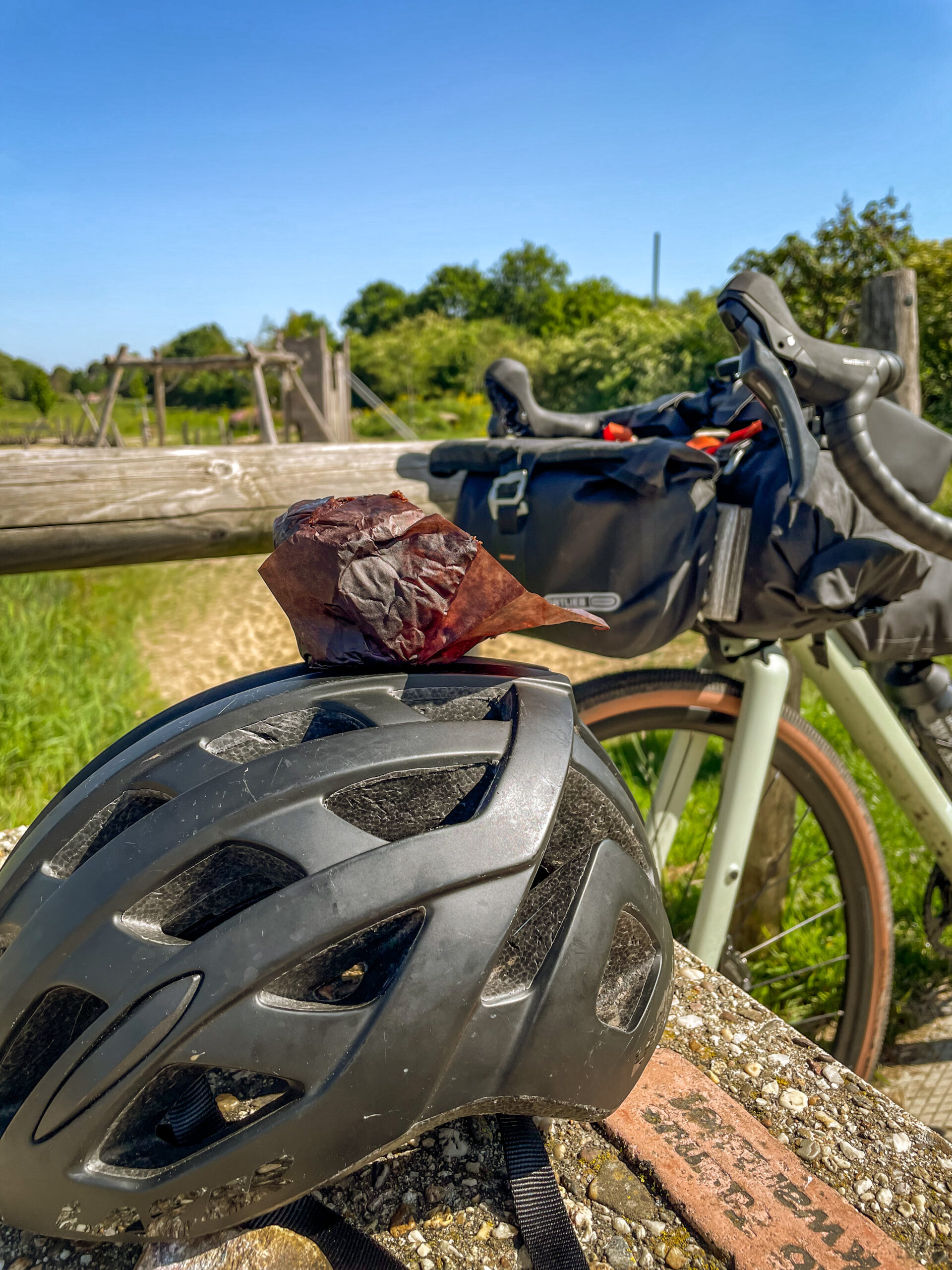
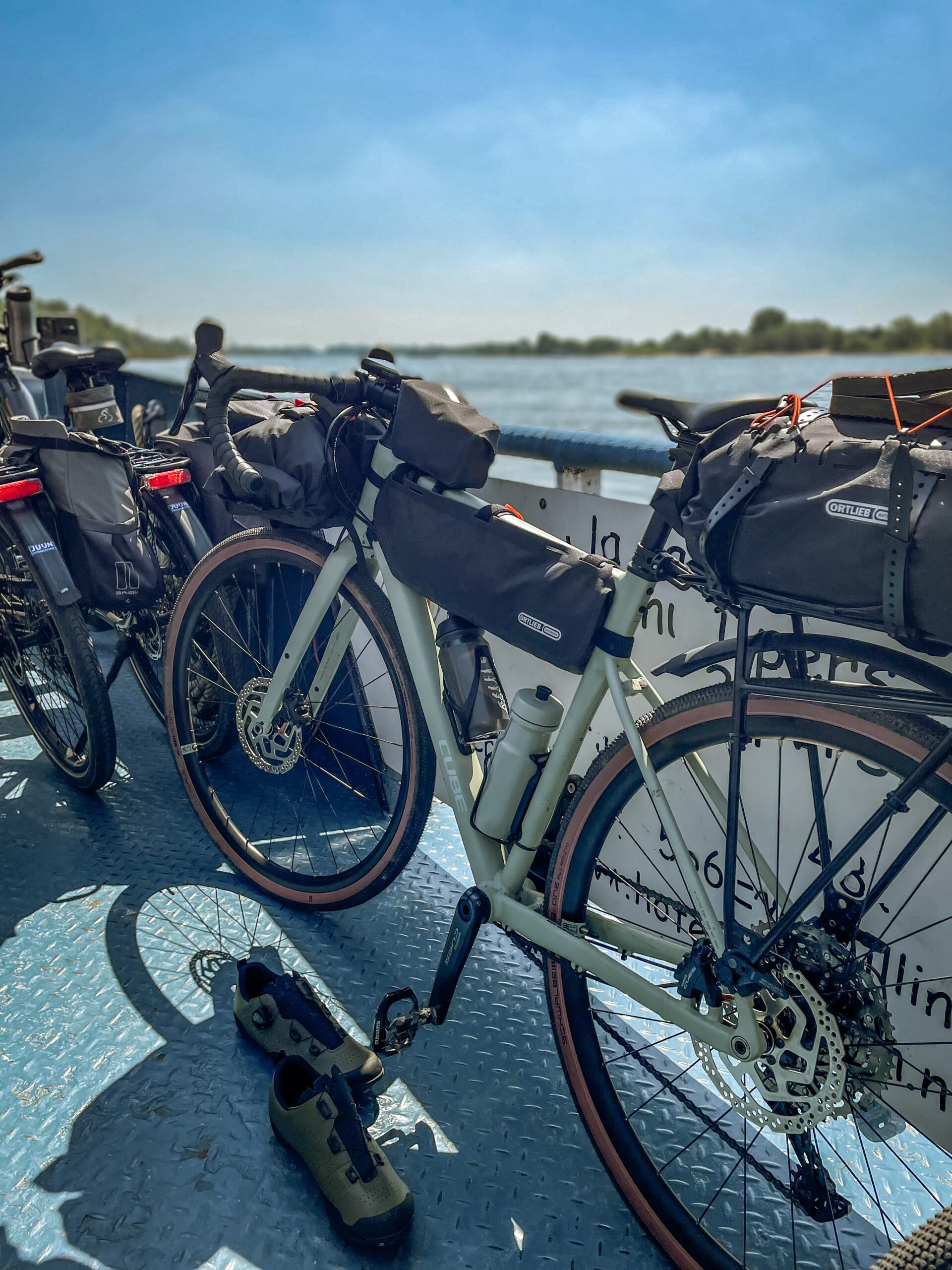
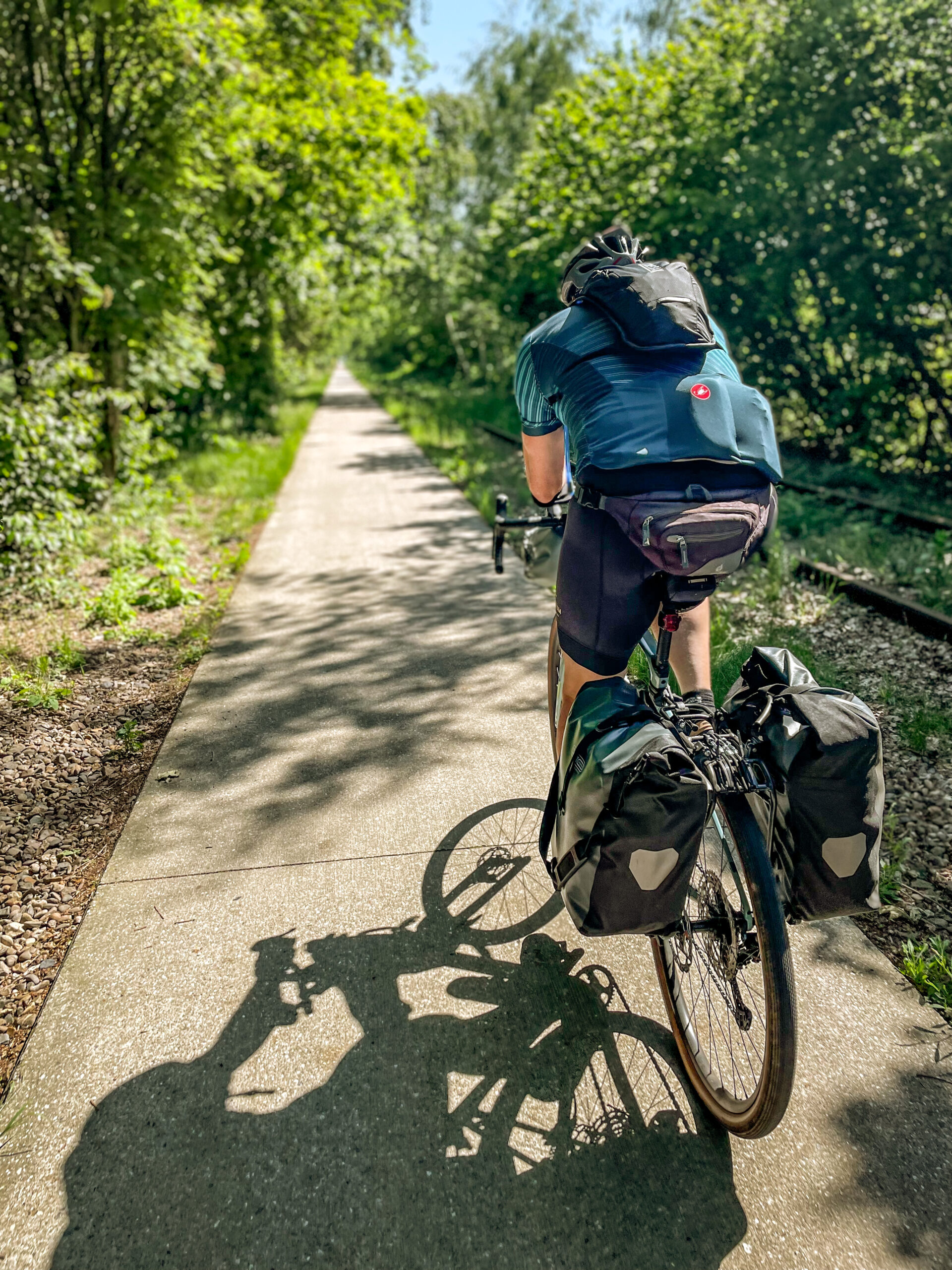
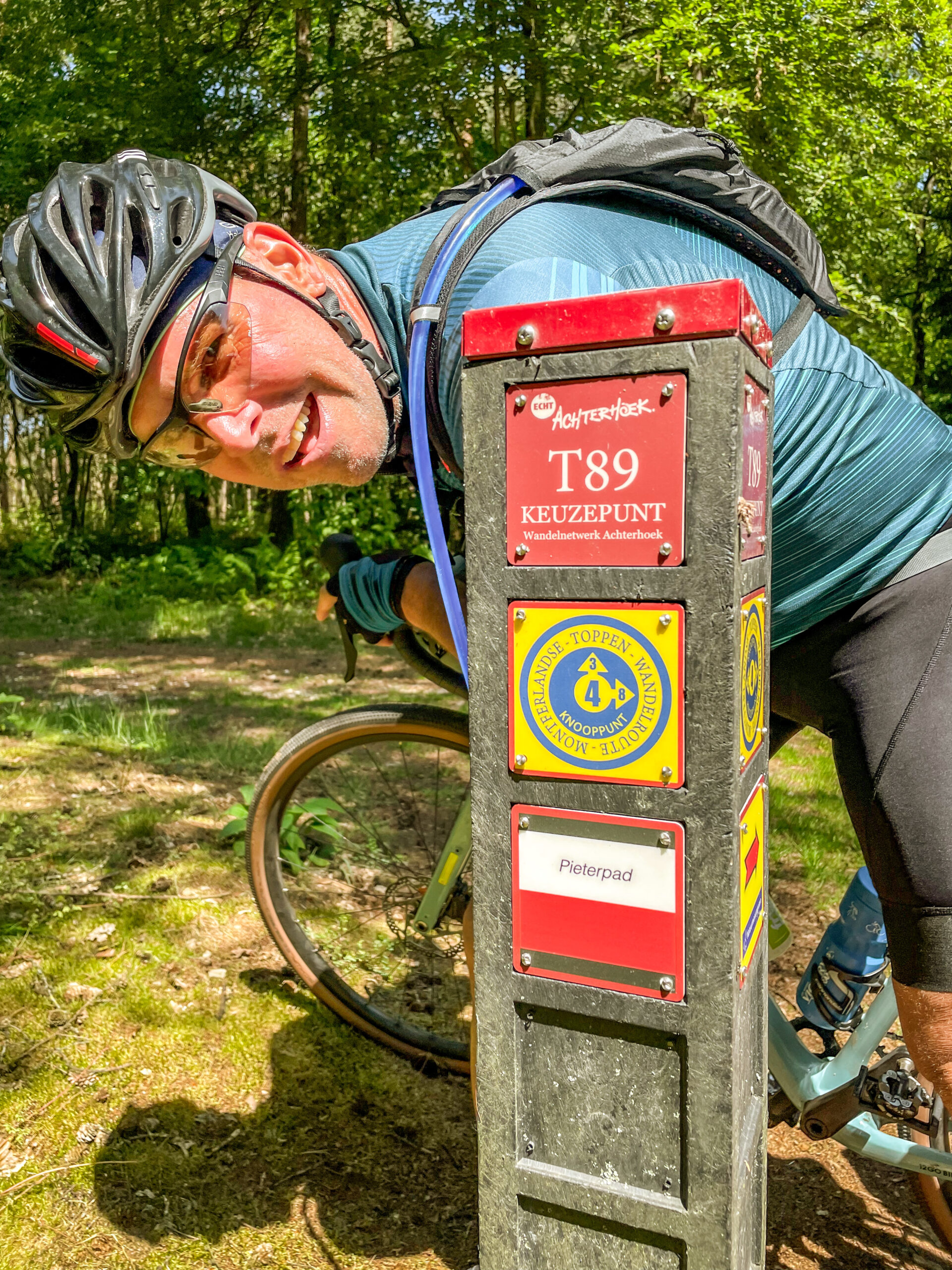
After a little over 50 kilometres, we take our first break. “Four blocks of 50 would be nice today,” Wim says. He pulls a bottle of chocolate milk, a currant bun, and a Mars bar from his bike bag. This morning Zoë had said, “You have to promise me you'll eat properly along the way.” She knows I often eat too little when I do things like this, especially when it’s hot. Today’s forecast is 28 degrees Celsius, and the coming days will be even warmer. I pull a muffin from my handlebar bag and send Zoë a photo. The first block of 50 kilometres felt incredibly easy, but the idea that we still have three more to go feels like a lot to Wim as well.
“100 kilometres is fun, by 150 I’m done with it, and anything beyond that isn’t fun anymore,” he says encouragingly. I laugh.
“What have we gotten ourselves into, Wim?”
We ride along small gravel paths through the fields, stretches beside the water, through charming villages, and along sandy forest tracks. The Netherlands is such a beautiful and varied country. Blocks two and three fly by as well, and suddenly we have 150 kilometres on the odometer. This was fun, but now we’re starting to feel everything. Surprisingly, both of us suffer most from our feet. They feel squeezed inside our shoes. We don’t manage block four in one go. After only 20 kilometres, we stop to take off our shoes and stretch our entire bodies. Not much later, we can feel that the tank is almost empty. We collapse onto the terrace of Backhuus snack bar in Glandorf, just one kilometre from the German border.
“Long ride today?” an older man on the terrace asks. “How much have you done, 50 or 60 kilometres?” I glance at the GPS.
“We’re at 185 now.”
The man nearly falls off his chair. “Next week I’m doing 120 kilometres—on a scooter—and I already consider that an achievement,” he laughs.
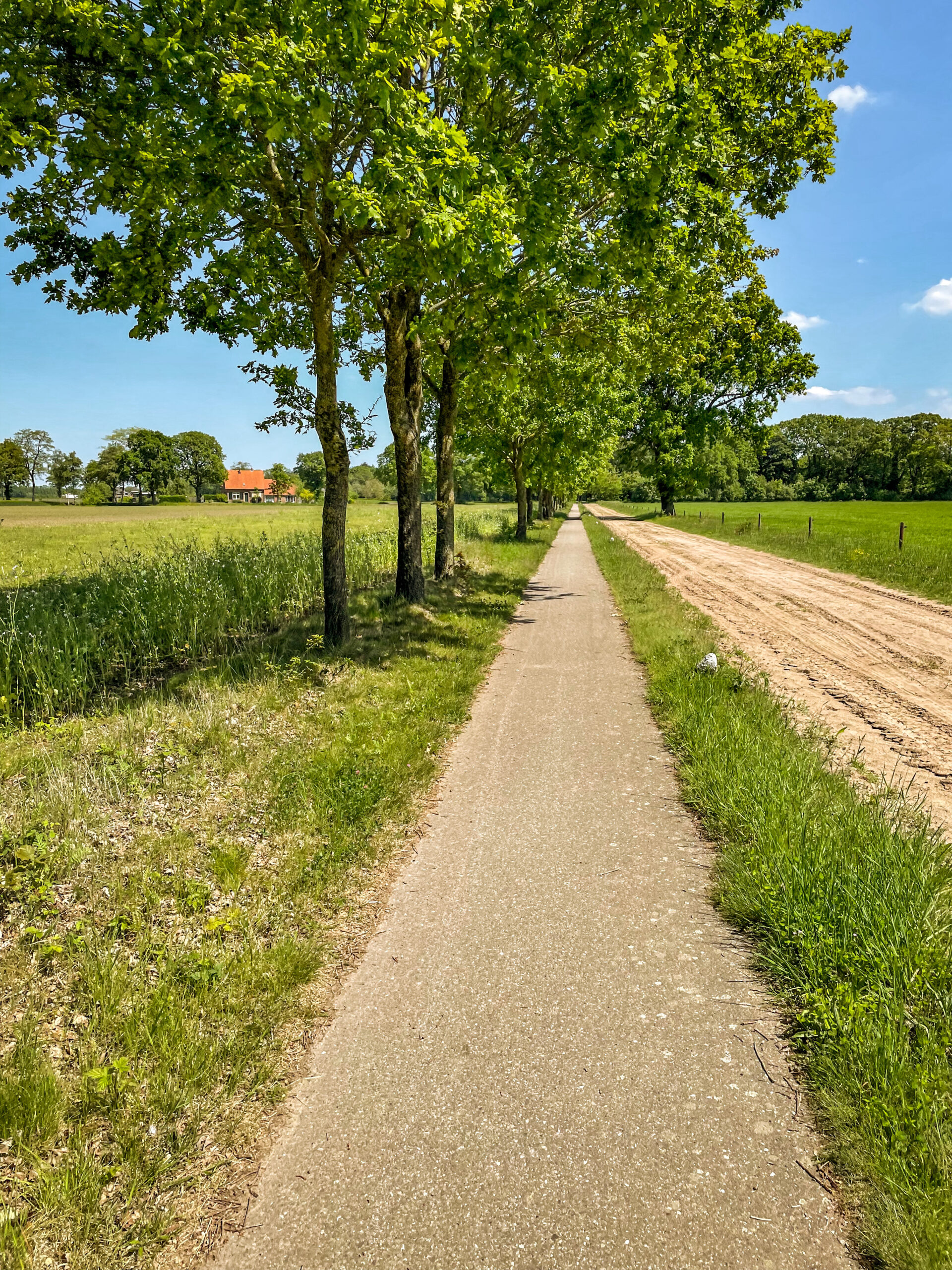
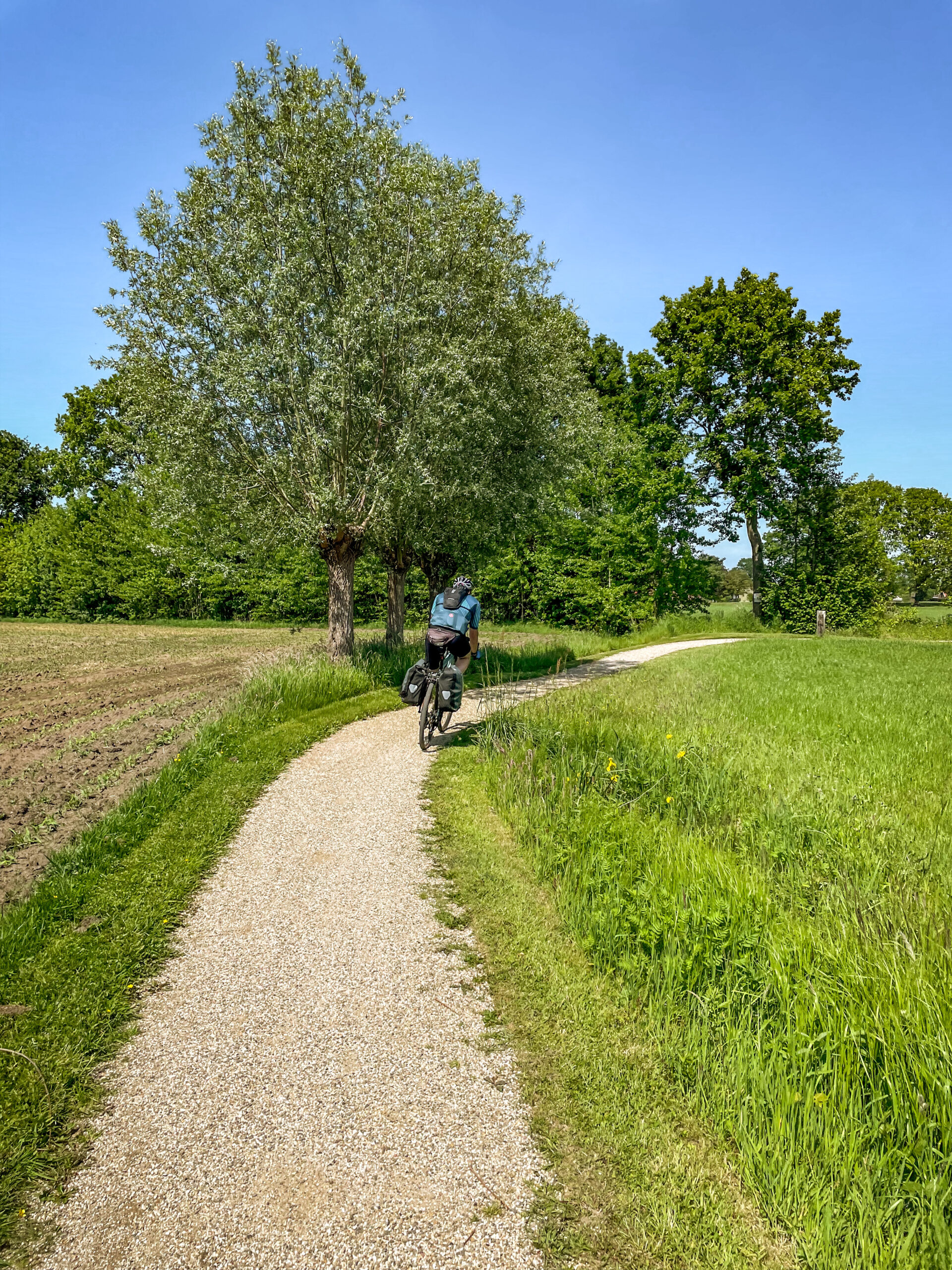
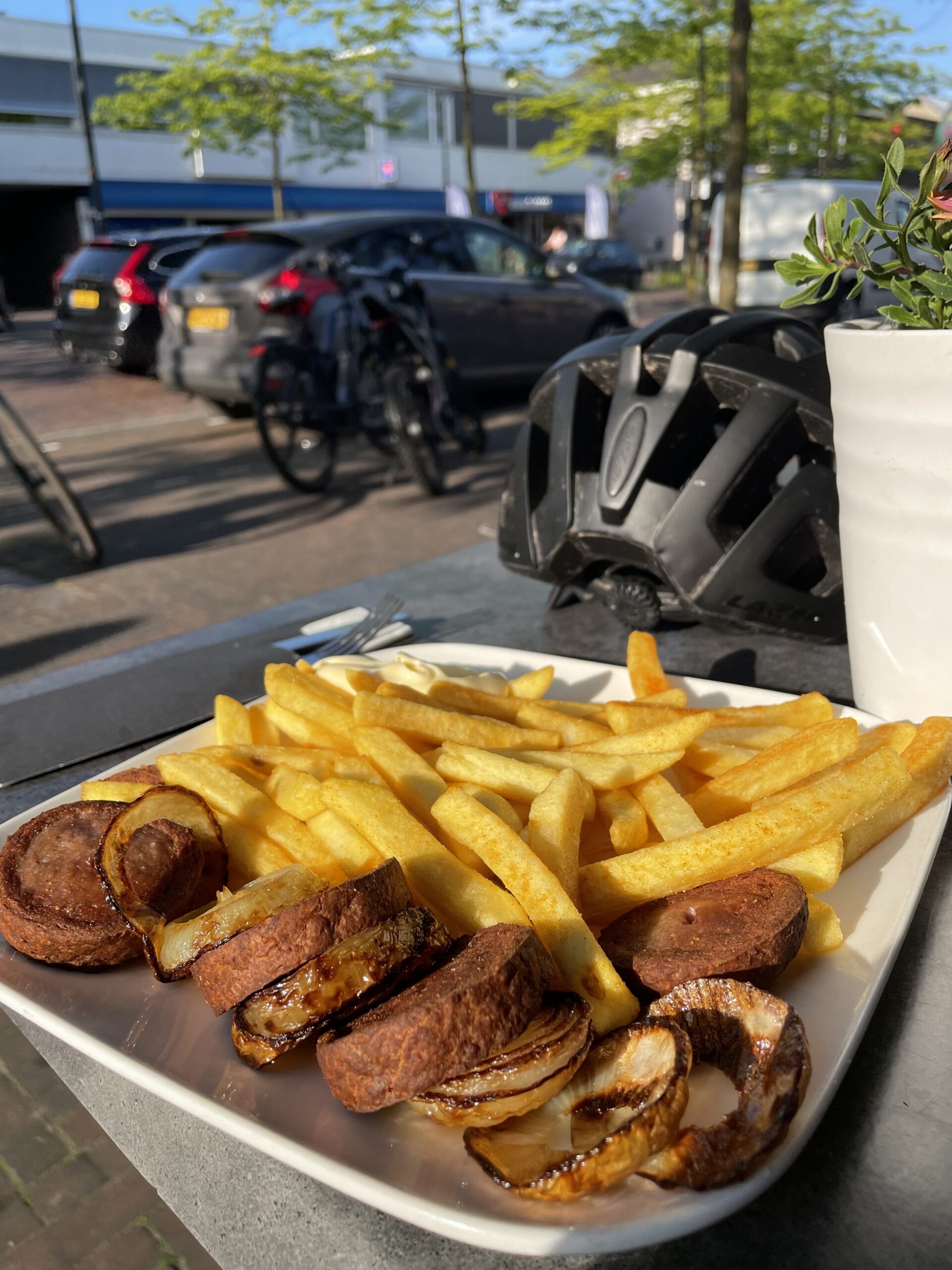
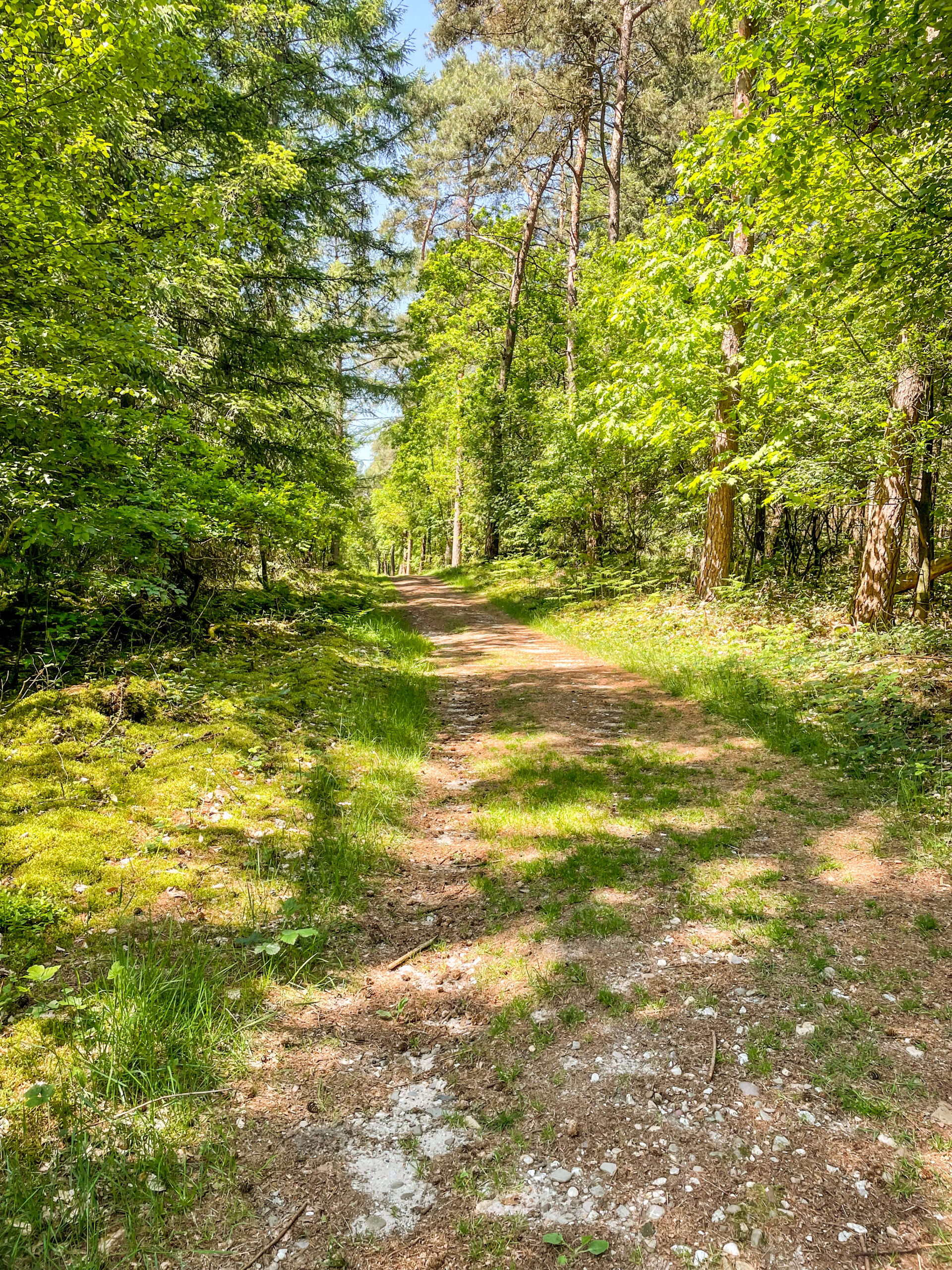
Meanwhile, Wim has already ordered an ice cream and a large milkshake and is stretched out in his terrace chair. With every sip of milkshake, energy flows back into his body. “I’m not ready to leave yet,” he laughs. We order fries and look for a campsite on the map. We would like to hit 200 kilometres and find a campsite just across the border, about 20 kilometres from the snack bar. Wim gives them a call. Reception closes at 8 p.m., but if we arrive no later than 8:30 p.m., we are still welcome. “And not a minute later,” the woman says sternly. After the ice cream, fries, and the long break for our feet, we feel reborn. The final 20 kilometres fly by, and at 8:10 p.m. we arrive at the campsite. Unfortunately, they don’t sell beer, but they do have a shower and a patch of grass for our tent. I pitch my tarp and fiddle around with the setup. Once again, I feel a familiar irritation. Why didn’t I just bring a tent?
Early the next morning, we are out of our tents before 6 a.m., but it is clear that we have not yet developed a proper morning routine. Packing up, eating breakfast, brushing our teeth, making one more trip to the toilet—it all takes time. It is not until after 7:30 that we get on our bikes. Wim is riding back home and has 240 kilometres ahead of him to Spijkenisse. I have roughly the same distance to cover heading east.
“See you in Norway,” says Wim, and we each go our separate ways.
The first few kilometres alone feel a little strange. No Wim in front of me or behind me. Just the GPS occasionally telling me to turn left or right. I ride much farther than necessary before taking my first break—almost 70 kilometres. I recover on a bench beside a church and decide I want to do at least three more blocks of 50 kilometres today. I can feel that I’m not hungry, and the water in my bottles is no longer cool enough to quench my thirst. My backside is still sore from yesterday, and I can already feel my feet. It is going to be a long day.


Just after the 100-kilometre mark, I pass a house. My bottles are empty, and I see a family outside. I turn into the driveway and ask in my best German if they could refill my water bottles.
“Sit down,” the man gestures, pointing to the steps by the front door.
I must look tired. At least that’s how I feel in the heat. He fills my bottles with cold water and asks if I would like an apple or a banana. Out of politeness, I am inclined to say no, but instead I reply: “An apple would be really nice right now.” I receive two apples and a small bag of peaches. The man repeatedly asks whether I know Ardarcaci. “Yes, that ultrarunner,” I reply. “He does crazy things like this too,” the man says. He calls over his son, who shows me the Instagram page and decides to start following my journey as well. A little refreshed, I continue riding while enjoying an apple that has never tasted so good. Truly an apple for the thirst.
The next two days, supermarkets will be closed because of Pentecost. I stop at the last Lidl I come across and buy as much food as I can fit into my bags. It is not enough for two full days, so tomorrow evening it will probably be döner kebab or pizza, and hopefully I will find a bakery somewhere that is open. Around 8:30 p.m., I find a perfect spot beside a river. The GPS reads 232 kilometres. I am completely exhausted, but a swim in the river works wonders. I pitch my tarp, eat a packet of ready-made cold pasta, and a few pieces of chocolate. Today I have eaten far too little, but I no longer feel hungry. I lie stretched out on my sleeping mat while a beaver swims along the opposite bank. At 10 p.m., I pull my sleeping bag over myself, post a few stories online, and set my alarm for 5:45 a.m. I fall asleep instantly.
On Sunday, I am on the bike by 6:15 a.m. By breakfast time, I have already covered 55 kilometres. This is the routine we will need in Norway as well: wake up, pack up, eat a banana, ride 50 kilometres, and then have breakfast. It has taken me a day to fully settle into the rhythm, but today I feel fresh and completely at ease. I speed along long stretches of canal paths, beautiful gravel roads through forests, cycle paths beside busier roads, and straight through tiny villages. The landscape is a little more monotonous than in the Netherlands, but the kilometres fly by. Whenever a bakery or café is open, I stop for a quick pastry or an ice cream. Refill the water bottles and move on. When I finally stretch my legs on the grass beside a church, my watch tells me after fifteen minutes that it is time to keep going. Life has become nothing more than cycling, eating, cycling, sleeping, and repeating. There is far more cycling than I had imagined and far fewer breaks and moments to simply enjoy the journey. By evening, I have absolutely no energy left to cook, and even a short stop at the supermarket takes up valuable time. My average speed is still around 21–22 kilometres per hour, but in Norway it will be considerably lower. That means less sleep and even shorter breaks. Wim’s friends were right. “Wim, do you know what you're getting yourself into? This is a race where people ride day and night!” It is simply brutal—and all the satisfaction comes afterwards.


By Tuesday morning, I have only 120 kilometres left to Copenhagen. The previous days averaged around 220 kilometres each, so today feels like only half a day. I take more breaks than usual, but my body also seems to hurt much more than it did over the previous days. My backside is covered in chafing from all the sweating. My feet hurt just as much as before. My hands have pressure points, and my shoulders ache. Only my legs feel nothing. They are in shape and keep turning the pedals effortlessly, with or against the wind, uphill or through sand. With a few adjustments to my bike and equipment, I might be able to eliminate the worst discomforts—and perhaps I will even be able to enjoy Mother North.
Well ahead of schedule, I ride into Copenhagen. I stop briefly at the Little Mermaid and buy far too much food at a supermarket. With a bulging grocery bag, I roll into the belly of the ferry. The first 1,000 kilometres are done. I wash the sweat off in the shower and rinse out my cycling clothes. Wearing fresh clothes and flip-flops, I sink into a chair on deck. Summer music blasts from the speakers, and the sun feels wonderful. I crack open a beer, put my feet up on the chair beside me, and am amazed at how quickly I have recovered. Cycle, eat, cycle, sleep. Life really is that simple. My watch spent the entire trip buried in my handlebar bag. I did not miss my laptop for a single second. I never once thought about work. Instead, I spent hours daydreaming about new adventures with Zoë and Zorrita. Bring it on, Mother North.


